


Petrol And Industrial Services
A closer look at the work, thinking and digital experience behind this project.
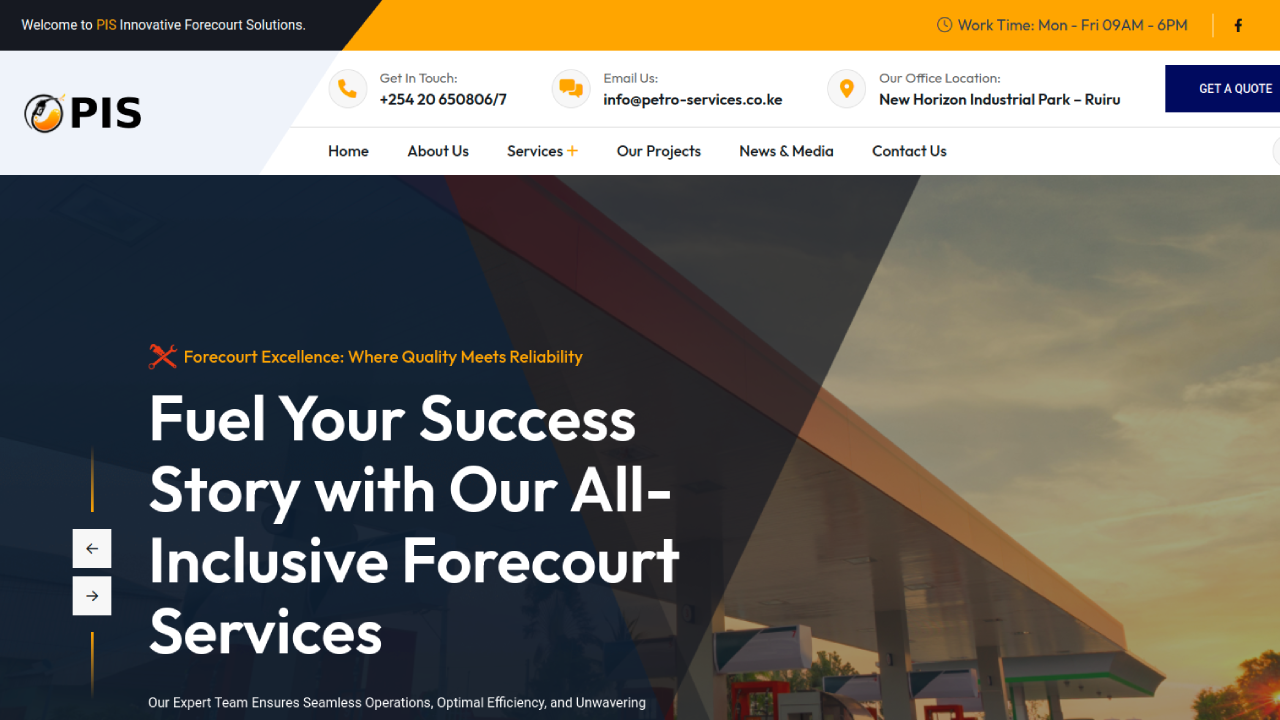
Petrol and Industrial Services supplies, installs and maintains petrol station equipment and water-related systems across East Africa.
We designed its website to explain those connected capabilities and help prospective clients find the service that relates to their own project, equipment or support requirement.
We made the equipment journey easier to follow.
A business planning a new forecourt has different questions from one looking for help with existing equipment. The first may be thinking about supply and installation. The second may need to discuss maintenance. Both need to understand where the same company can help.
We approached Petrol and Industrial Services’ website with that distinction in mind. We wanted the range of capabilities to feel connected while giving each visitor a recognisable starting point.
This is how we turned a broad industrial offering into a journey from service discovery to a more specific enquiry.
Buying equipment and keeping it working are different questions.
The challenge was to explain the relationship between the equipment and the support around it. A list of products can introduce what is available. It does not explain the wider service conversation.
We needed the website to help someone distinguish between sourcing equipment, arranging its setup and discussing ongoing care. Those needs can belong to the same operation, but they do not always arise at the same time.
We also wanted the service explanation to sit alongside work a visitor could explore. Someone considering an industrial supplier should have more to investigate than a general company introduction.
That shaped our approach: give the services their own space, bring project information into the experience and make the contact route easy to find. We wanted the first enquiry to begin with a clearer sense of what the visitor needed.
“Which part of the job do we need help with?”
We gave that question clear starting points. Visitors can explore supply, installation or maintenance before approaching the team about their own requirement.
We wanted visitors to find the help that matched their situation.
We organised the work around three jobs: find a relevant capability, understand how it fits into the wider offering and know how to approach the team. Each needed a clear place in the website.
We wanted to serve someone researching a future project and someone already responsible for installed equipment. That meant letting the visitor choose their starting point while retaining a view of the support available around it.
Recognise the service need
We gave the main capabilities distinct routes into detail, helping visitors begin with the area relevant to their situation.
Understand the wider offering
We connected equipment information with installation and support, so visitors can investigate more than the initial purchase.
Make the enquiry specific
We paired the service explanation with a consultation route, giving visitors a place to discuss a particular site or requirement.
We connected supply, installation and ongoing support.
We began by separating the main service routes. Supply, installation and configuration, and maintenance each have their own explanation. We gave those areas distinct jobs so a visitor could investigate the need closest to their situation.
We then connected the service offering with project information. The projects area groups work by categories such as supply, installation and maintenance. That gives the visitor another way to explore the business through the type of work involved.
We also made room for common questions. We wanted someone who was still getting familiar with the company to have a way to investigate the offering before making contact.
Finally, we connected the information with the consultation route. The contact page brings the company’s location and contact details together with an enquiry form. A visitor can take the remaining questions into a conversation about a particular site or requirement.
01 — We separated the service routes
We gave supply, installation and maintenance their own explanations, reflecting the different questions visitors may bring.
02 — We organised project information
We presented project work by service category, giving visitors another way to explore the business.
03 — We connected interest with consultation
We brought contact details and an enquiry form into one destination, keeping the next conversation within reach.
We gave each part of the service journey its own role.
We gave the website features complementary roles. The service pages introduce the capabilities. Project categories let a visitor explore work by type. The contact page provides a destination for the next question.
We wanted that connection to remain useful at different stages. Someone can begin with equipment supply, look further into installation or support, then discuss the requirement with the team.
Dedicated service explanations
We gave each main capability space beyond an overview, helping visitors investigate the support they need.
Projects grouped by work type
We organised the project area into categories, connecting the offering with work a visitor can explore.
A consultation destination
We brought the company’s location, phone and email details together with an enquiry form.
The service range became a clearer conversation starter.
We delivered a website that brings Petrol and Industrial Services’ capabilities, project information and enquiry routes into one experience. Visitors have a place to explore the service that interests them and see how it connects with the wider offering.
The practical outcome is the structure we built. Supply, setup and support have recognisable destinations. The project content adds another route into the work. The consultation page gives that investigation a next step.
We focused on making the business easier to explore before a site-specific conversation begins.
The range had starting points
We gave the broad offering a structure that lets visitors begin with a relevant need.
The work supported investigation
We connected the service descriptions with project information, adding another route into the business.
The next step was available
We paired the information with contact routes so visitors can discuss their own operational context.
A useful industrial website starts with the customer’s next question.
For us, the important question was where the visitor was starting. A future purchase, an installation requirement and a maintenance enquiry call for different explanations.
We designed the website to make room for those differences while showing the connection between them. That gave the breadth of the business a practical purpose in the visitor’s journey.
The lesson is straightforward: a broad service offering needs more than a long list. It needs starting points that reflect the questions people bring.
That is what we focused on for Petrol and Industrial Services. We organised the capabilities around recognisable needs, connected them with project information and gave the visitor a way to continue. The website can then help turn “can you help us?” into a more useful conversation about what help is needed.