


Marcopolo Tours & Safaris
A closer look at the work, thinking and digital experience behind this project.
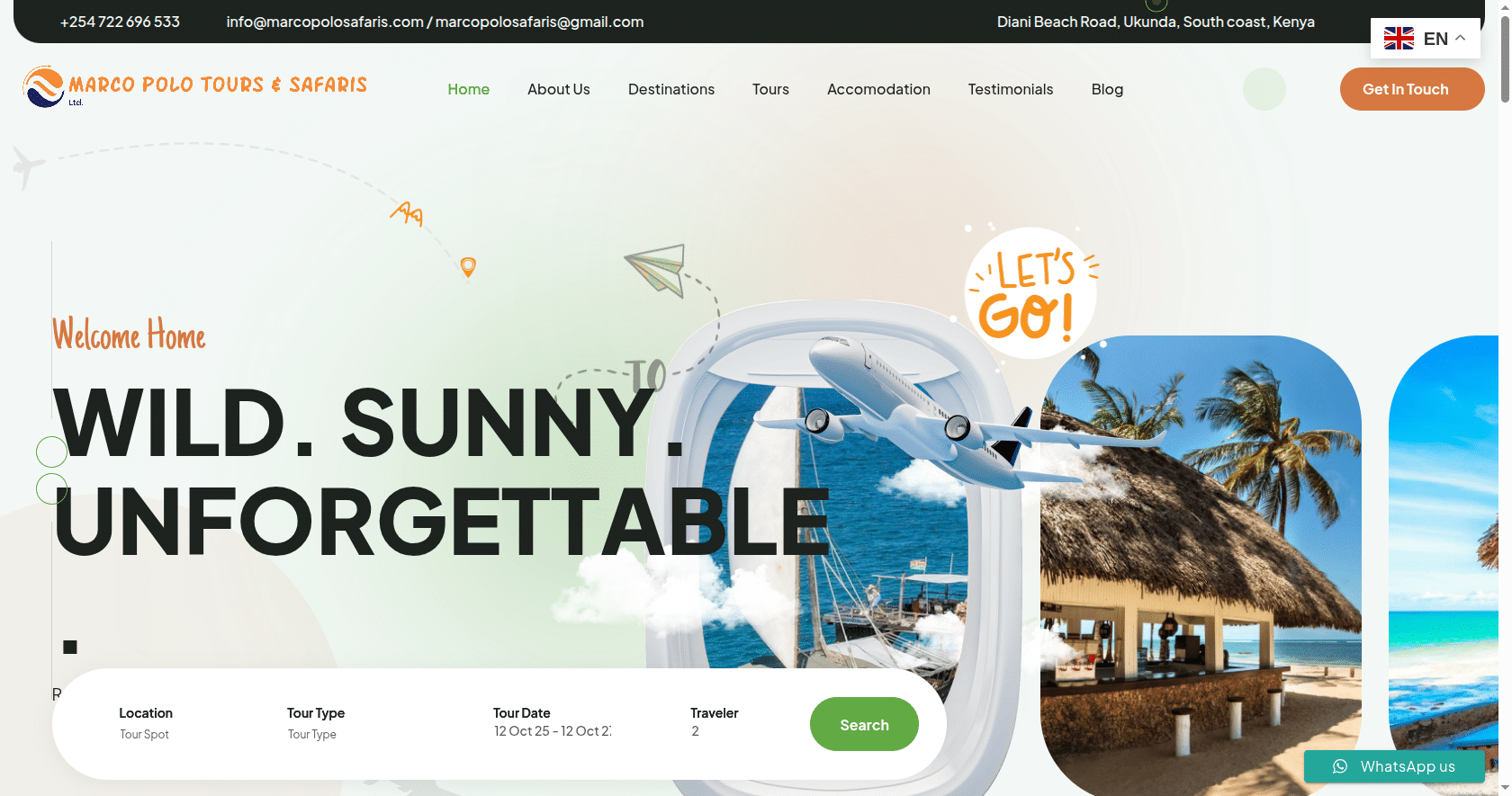
Marco Polo Tours & Safaris offers East African safaris and beach holidays.
We designed its website to bring those travel experiences together, connect destination discovery with tour options and help prospective travellers begin planning their journey.
From “we’d love a safari” to “let’s plan our trip.”
A safari often begins long before the flight. Someone sees a photograph, imagines a morning game drive and starts wondering whether they could fit a few days at the coast into the same holiday. The excitement comes easily. Working out where to begin can take more effort.
We designed Marco Polo Tours & Safaris’ website around that moment. We brought its safari and beach offering into a place where travellers could explore possibilities, understand more about a trip and begin planning with the team. Here is how we connected the dream with the decisions behind it.
The dream was clear. The next decision needed help.
Imagine two visitors arriving at the website. One already has a destination in mind and wants to see suitable tours. The other is still asking, “What could we do with the time we have?” They may both want a safari, but they need different kinds of help.
We had to make room for that difference. A travel website needs to invite exploration and give it direction. The visitor should be able to enjoy the possibilities, then find information that helps them narrow the choice.
We treated the website as the start of the planning conversation. We connected the operator’s introduction with places to explore and trips to consider. That gave visitors different ways into the experience, depending on how much of their holiday they had already worked out.
Our focus was the handover between inspiration and information. A beautiful image can make someone want to travel. The surrounding content still has to help them understand what they are looking at and what they might ask next.
“How would this holiday work for us?”
That is the question we wanted the website to help a traveller explore. We connected the invitation to travel with information about the options and the planning journey, so curiosity could develop into a more useful conversation.
We wanted inspiration to lead into a real travel plan.
We wanted the website to support three stages of a travel decision: imagine the experience, explore a suitable option and begin discussing the details. Those stages shaped how we connected the business introduction, destination content and tours.
We also wanted the safari and beach sides of the offering to feel like parts of one holiday story. A visitor could start with one interest and discover how it might fit into a wider journey.
Let the experience create interest
We brought the safari and beach offer into the opening story. The aim was to help visitors imagine the kind of holiday available before asking them to choose a specific trip.
Give exploration some direction
We connected places with tours. A visitor who has an idea of where they want to go can explore further, while someone still weighing up the possibilities has a way into the offering.
Make planning part of the story
We gave the process of arranging a trip a place in the experience. We wanted an interested visitor to understand that an early idea can become the starting point for a conversation about their holiday.
We gave the holiday dream a route through the website.
We started by giving visitors more than one way to explore. Some people think in places: “We want to go there.” Others think in experiences or the time available: “What sort of trip could we take?” We connected destination browsing with tour listings so those different starting points could lead further into the offering.
We then gave the trip options context. A tour name becomes more useful when the visitor can see the destination and duration alongside it. Those details help someone decide what deserves a closer look. We used the content structure to make exploration more purposeful.
Finally, we made room for the planning process itself. A tailored holiday involves choices that need a conversation. We included an explanation of how a traveller can move from an idea to a proposed itinerary. That helps the website introduce the experience and the work involved in arranging it.
01 — We connected places and trips
We gave destination discovery and tour browsing complementary roles. One introduces a place; the other brings a particular journey into view. We used that relationship to help visitors keep exploring with a purpose.
02 — We added detail to the invitation
We presented individual tour options with practical context, including where they go and how long they run. Those details help a visitor decide whether an option deserves a closer look.
03 — We explained how an idea develops
We included planning guidance alongside the travel offering. A visitor may know the experience they want without having the whole route settled. We made room for that stage of the decision.
We helped visitors explore in the way they think.
We gave the website features roles in the traveller’s decision. Destinations support discovery. Tour listings bring individual options into view. Planning guidance explains how an idea can develop into a trip.
We connected these parts because visitors do not all arrive ready to choose. Someone may browse today, compare possibilities tomorrow and ask a question later. The website needs to give that exploration a useful direction at each stage.
Destinations for the early explorer
We gave destination content a clear place in the browsing journey. A traveller can start with a place that interests them and use it as a way into the wider holiday offering.
Tours with practical context
We brought individual trips into view through tour listings and supporting details. That helps someone move from general interest to an option they can investigate in more depth.
An introduction to the planning process
We explained how an initial travel idea can develop with the operator’s help. We gave that process a visible role because a tailored holiday often starts with questions, preferences and possibilities.
The safari and beach story came together online.
We delivered a website that brings Marco Polo’s travel offering, destination information and tour options into one online home. The business has a place to introduce its approach, while prospective travellers have several routes for exploring the possibilities.
The outcome is the connected browsing experience we built. Inspiration has supporting information around it. Individual tours sit within a wider holiday offering. The planning explanation gives an interested visitor a clearer sense of how to begin. Those are the practical pieces we brought together.
The offering had one home
We brought the safari and beach offering into one branded website. Visitors can start with an introduction to the business, then explore the places and trips that interest them.
Exploration had a direction
We connected broad travel interests with more specific information. A visitor can move from imagining an experience to considering a destination or tour worth exploring further.
Planning became part of the experience
We paired the travel invitation with an explanation of how the journey can be arranged. The website gives the initial idea a route towards a more detailed discussion with the operator.
A travel website should help the journey begin.
For us, the central task was helping a holiday idea become something a traveller could explore. We brought the visual invitation, the places and the trip options together, then gave the planning process a role in the story.
A travel website has to earn more than a passing glance. It needs to help people decide what to investigate, understand enough to ask useful questions and see how the operator can help shape their plans.
That is the lesson we took into this build: let the experience create interest, then give that interest somewhere to go. The detail matters because it carries the visitor from imagining the holiday towards discussing the journey.
We designed Marco Polo’s website to support that transition. From an early safari idea to a conversation about a trip, the experience has a thread to follow. The journey starts on the screen, even though the memories will be made somewhere else.