


Crest Trackers Ltd
A closer look at the work, thinking and digital experience behind this project.
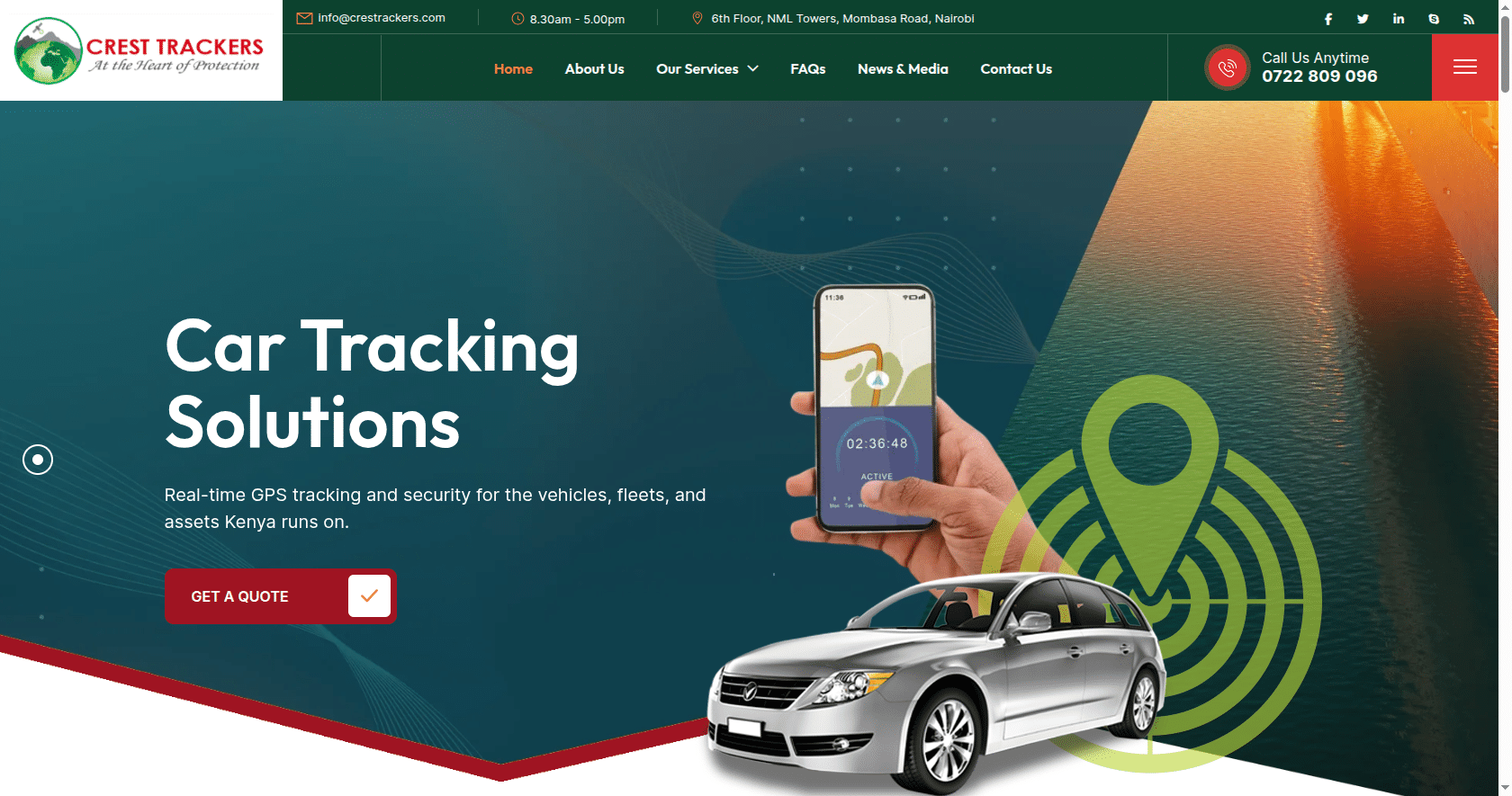
Crest Trackers Ltd provides vehicle tracking, fleet management and related security solutions in Kenya.
We designed its website to introduce the business, explain the service range and give prospective customers a clear route to learn more and make contact.
How we built a clearer website for Crest Trackers.
We designed Crest Trackers’ website around a practical question: can a visitor understand the protection on offer, find the right service and know how to start?
We brought the business introduction, service information and customer questions into one website. Our focus was a clear journey from recognising a need to discussing it with the team. Here is what we did and the thinking behind it.
We connected tracking services with customer needs.
We were designing for customers with different reasons to look for tracking. Someone protecting a personal vehicle may arrive with an immediate security concern. A business managing several vehicles may be thinking about oversight, daily operations and accountability.
We needed the website to give those visitors a useful starting point. A broad promise of protection can get attention, but it does not explain which service fits a particular requirement.
We were designing for a business with several specialist services: security, surveillance, automation, IT infrastructure and solar energy. The website needed to show how those capabilities fitted together while still helping someone with one specific requirement.
Think about the visitor. A homeowner looking for surveillance and a business looking for IT infrastructure may arrive with very different questions. We needed to give both a useful starting point.
We addressed that through the information structure. We introduced the overall business, then provided routes into the individual services and supporting information. We gave the website room to explain the offering without asking every visitor to read everything.
The design decision was simple: start with the customer’s question and make the next piece of information easy to reach. That helped us connect the opening message with a more purposeful browsing journey.
The question we designed around
We kept asking: “Can this visitor see where their requirement fits?” That kept the design focused on relevance before detail. We wanted the opening message to lead into useful information rather than leave the customer to work out the service range alone.
We focused on relevance, clarity and enquiry.
We organised the project around three questions: “Can they help with my situation?”, “What should I understand before choosing?” and “How do I get advice?” We used those questions to connect the service presentation, supporting content and contact routes.
We made the services distinct
We gave car tracking, fleet management, asset tracking and fuel monitoring their own routes in the service navigation. That helps the visitor start with a recognisable need and explore further without treating every customer as if they want the same solution.
We added context before contact
We connected the service introduction with company and process information. For a specialist provider, a visitor needs more than a list of capabilities. We made room to explain the business and how a customer can begin working with the team.
We supported the next conversation
We gave contact a clear place in the website navigation. Someone may need advice before they know exactly which service to choose. We made that discussion part of the journey instead of expecting the website to answer every individual requirement.
We built a journey from first question to enquiry.
We built the website as a sequence. First, establish what Crest Trackers does. Next, help the visitor explore the relevant service. Then provide information that supports the decision and a route to speak with the team.
Why does that order matter? A customer can recognise the problem they want to solve without knowing the right technical solution. The website needs to make that conversation easier to begin. We gave the business an introduction that leads somewhere useful.
We also explained the service journey beyond the initial enquiry. Showing the steps helps visitors understand what engaging the company involves. We treated that explanation as part of the website’s job: give people enough context to take a considered next step.
01 — We organised the service routes
We separated the offering into clear service destinations. The purpose was to help customers move from a broad interest in tracking to information relevant to their situation. A useful navigation structure should reflect the questions people bring to the website.
02 — We explained what happens next
We included a process covering consultation, installation and ongoing support. We gave that sequence a visible role because customers are choosing an ongoing service relationship as well as a device. Explaining the steps provides context for the initial enquiry.
03 — We made room for questions
We included supporting answers and contact information alongside the main service journey. The goal was to help visitors explore at their own pace and recognise when a conversation with the team would be useful.
We gave each customer question a place.
We supported the main journey with content that answers different kinds of questions. Service pages explain the offering. Process information explains what comes next. FAQs give common concerns a place in the experience. Each part supports a different decision.
We created service navigation
We grouped the main service routes under Our Services. That creates a direct starting point for someone who already knows the type of help they need, while the homepage can introduce the wider business.
We gave FAQs a clear role
We included an FAQ route for recurring customer questions. We used supporting content to add context before enquiry, giving visitors another way to understand the offering without interrupting the main service presentation.
We kept contact accessible
We put contact details and Contact Us within the website experience. Customers can move from reading to asking about their own circumstances. That connection gives the information journey a practical purpose.
We delivered a clearer online home for Crest.
We delivered a branded website that brings the company introduction, service information and customer guidance into one online destination. Crest Trackers has a place to explain its work, and prospective customers have routes to explore before making contact.
The outcome is the connected information journey. We gave the opening message supporting detail and gave that detail a next step. That is the practical value of the build: the website can introduce the company and support a more informed service discussion.
We brought the offering together
We delivered a website where the business introduction leads into the service range and supporting content. Crest has one destination for explaining its work to prospective customers.
We gave the information a sequence
We connected relevance, explanation and next steps within the page structure. Each part has a job: introduce the business, help the visitor explore and support an informed discussion.
We connected content with enquiry
We paired the service information with customer guidance and contact routes. The result gives visitors more context for describing what they need when they speak with the team.
We made a specialist service easier to explore.
We approached Crest Trackers’ website as a communication project as well as a design project. We organised the offering, gave supporting questions a place and connected the information with a route to a conversation.
The lesson is straightforward: a specialist business needs to explain its expertise in terms a prospective customer can use. We used the website structure to connect what the company does with what a visitor needs to understand.
For a service built around protection, clarity matters. Help the visitor recognise the relevant offering. Explain enough to support the decision. Make it easy to ask the next question.
That is what we focused on for Crest Trackers: a clear introduction, a purposeful service journey and useful information before the customer gets in touch.