


Bee Farm
A closer look at the work, thinking and digital experience behind this project.
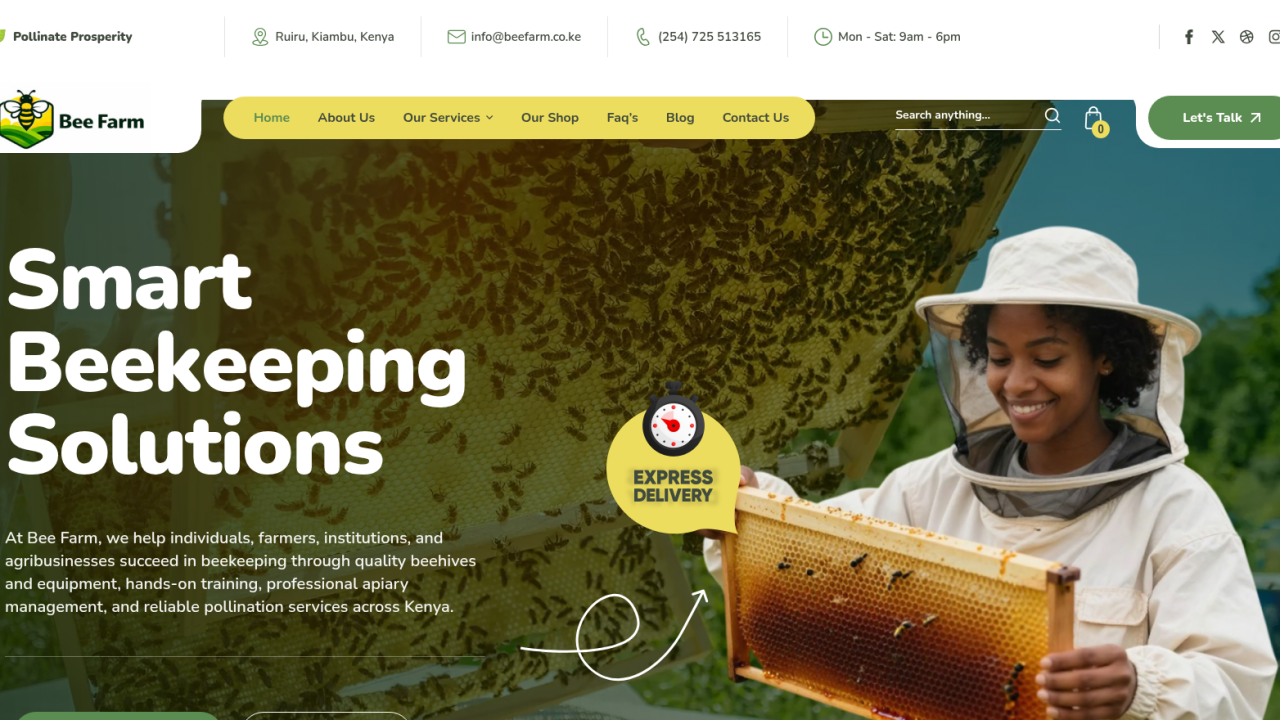
Bee Farm Limited supports beekeeping in Kenya, helping people start their first hive, expand an apiary or seek practical support.
We designed its website to introduce that offer clearly and help prospective customers connect their beekeeping plans with a more informed enquiry.
We helped turn an interest in beekeeping into a clearer next step.
“I would like to try beekeeping.” That is a starting point, but it leaves plenty to talk about. Someone taking their first steps needs a different conversation from a farmer who already has an apiary. We wanted Bee Farm’s website to recognise that difference.
We designed the experience around helping visitors understand the business and see where its practical support could fit their plans. We brought the introduction, the offer and the next step into a connected story. Because interest is useful, but a visitor also needs to know what they can do with it.
A first-time beekeeper and an experienced farmer arrive with different questions.
Imagine two people arriving at the same website. One is curious about starting a first hive. The other already keeps bees and wants help taking the next step. Both are interested in Bee Farm, but they are looking for different kinds of reassurance.
We needed the website to make room for those different starting points. A broad promise can attract attention. The information that follows needs to help someone work out whether the business understands the situation they are in.
We also needed to explain a practical business through a digital experience. Bee Farm’s work is rooted in hands-on knowledge and local conditions. We wanted that sense of usefulness to come through in the way we introduced the company.
That shaped the challenge: make the offer approachable without oversimplifying the visitor’s decision. We chose to connect the beekeeping opportunity with the support behind it, giving people a reason to explore further and begin a conversation about their own plans.
“Where do I start—and who can help?”
We used that question to guide the introduction. We wanted the website to connect an interest in beekeeping with a better understanding of Bee Farm and a practical reason to enquire.
We wanted every visitor to find a relevant starting point.
We kept three goals in view: explain what Bee Farm offers, help different visitors recognise their own needs and make the next step easier to find. Those goals gave the content a direction. We wanted the website to help someone move from general interest to a more useful question.
We also wanted to reflect the practical nature of the business. A visitor should leave with a better understanding of the company’s approach and enough context to discuss what support might suit their situation.
Make the offer understandable
We introduced the business and the purpose behind its work. Visitors need context for what they are exploring before they can decide whether it relates to their plans.
Recognise different starting points
We made room in the story for starting, expanding and seeking support. Each gives a different visitor a way to recognise their own situation.
Support a more useful enquiry
We wanted the information to help someone identify what they needed to ask. A clearer understanding of the offer gives the next conversation a better starting point.
We connected the practical offer with the people it could help.
We started with the introduction. We brought Bee Farm’s focus on accessible, practical beekeeping into the website story, giving visitors context for the business before asking them to take the next step. We wanted the offer to feel connected to real needs.
We then shaped the explanation around the different stages of the customer’s journey: starting, expanding and seeking support. These are useful points of recognition. Someone should be able to see a connection between what they are trying to do and what they are reading.
Finally, we treated the website as the beginning of a conversation. A visitor’s own plans and circumstances still matter. We wanted the information to help them arrive at that conversation with a clearer idea of what they wanted to ask.
01 — We introduced the practical offer
We brought Bee Farm’s approach into the opening explanation. We wanted visitors to understand the business behind the name and the purpose of its support.
02 — We connected the offer with real needs
We shaped the story around people at different stages of beekeeping. That makes the explanation easier to relate to an individual visitor’s plans.
03 — We gave the conversation context
We treated the website as a starting point for discussing individual requirements. The content helps someone move from general curiosity towards a more specific question.
We gave the introduction, information and enquiry a shared purpose.
We gave the main parts of the experience complementary jobs. The introduction explains who Bee Farm is. The supporting information adds context to its offer. The link between the two helps visitors understand why the business could be relevant to them.
We kept that sequence in mind throughout the design. We wanted the first impression to lead into useful explanation, and that explanation to support a more informed enquiry about the visitor’s own beekeeping plans.
An introduction with a clear purpose
We gave the opening content the job of explaining Bee Farm’s focus. Someone discovering the business has a place to begin understanding what it aims to do.
An offer people can relate to
We connected the business explanation with starting and developing a beekeeping venture. That gives the visitor’s own plans a place in the story.
Practical context before contact
We used the supporting content to explain the approach behind the offer. We wanted a prospective customer to have more context before beginning an enquiry.
We gave Bee Farm a clearer digital introduction.
We delivered a website that gives Bee Farm a place to introduce its business and explain its practical approach to beekeeping. The experience connects the company’s offering with the different stages a prospective customer may be considering.
The outcome is the information journey we built. A visitor can move from discovering the business to understanding more about its purpose. That gives the next conversation a clearer starting point: what the visitor hopes to do and where Bee Farm’s support might fit.
The business had a clear introduction
We delivered a digital home for presenting Bee Farm and its practical focus. The website gives discovery a useful place to lead.
Different visitors had a point of recognition
We connected the explanation with different stages of beekeeping. A new visitor can look for relevance to the step they are considering.
The next conversation had a starting point
We gave prospective customers more context for an enquiry. They can begin thinking about their own requirements and the support they want to discuss.
Make the opportunity interesting. Then make the next step understandable.
For us, this project came down to helping people recognise a useful possibility. Beekeeping can interest someone long before they know which questions to ask. We wanted the website to meet that curiosity with a practical introduction.
We connected the business story with the visitor’s stage of the journey. That gave the design a purpose beyond the first impression: help someone understand enough to explore further and talk about their own plans.
The lesson is straightforward. When a business serves people with different levels of experience, its website should give them points of recognition. Explain the offer, make its relevance clear and help the visitor identify a useful next step.
That is what we focused on for Bee Farm. We brought its practical approach into a digital introduction built around the people it aims to help. Because a good website should do more than make an opportunity look interesting. It should help someone decide how to begin the conversation.